

Understanding Low Vision
What is Low Vision?
Low vision is a significant visual impairment that cannot be fully corrected with regular eyeglasses, contact lenses, medication, or surgery. Individuals with low vision have reduced eyesight that makes everyday activities such as reading, writing, recognizing faces, watching television, driving, or managing daily tasks more difficult.
Low vision can result from various eye conditions, including:
- Age-Related Macular Degeneration (AMD)
- Diabetic Retinopathy
- Glaucoma
- Retinitis Pigmentosa
- Stargardt Disease
- Optic Nerve Disorders
- Other retinal or neurological eye conditions
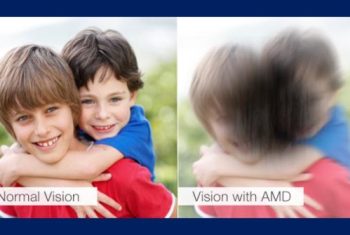
AMD
Age-Related Macular Degeneration (AMD) is an eye disease that damages the macula, causing the loss of sharp, central vision.

Glaucoma
Glaucoma causes permanent vision loss by destroying the microscopic nerve fibers that form the optic nerve, causing peripheral loss, “Tunnel Vision” effect, loss of contrast and blur.

Diabetic Retinopathy
Diabetic retinopathy is an eye disease caused by chronic high blood sugar levels that structurally damage the microscopic blood vessels supplying the retina, causing fluctuating blur, large visual floaters, dark or blank areas, washed-out colors and night blindness.
Although vision loss cannot usually be restored, many people with low vision can continue to live independently and enjoy their daily activities with the help of specialized low vision aids and rehabilitation strategies.
What is a Low Vision Assessment?
A low vision assessment is a comprehensive evaluation designed to determine how your remaining vision can be maximized. During the assessment, we will:
- Review your eye health and visual history
- Discuss your visual goals and daily challenges
- Measure your functional vision
- Assess reading and distance vision needs
- Recommend appropriate low vision devices and strategies
The goal is to help you make the best use of your remaining vision and improve your quality of life.
Low Vision Aids and Devices
Low vision aids are specialized tools designed to help individuals perform everyday tasks more easily. Depending on your visual needs, we may recommend:

Optical Magnifiers
- Handheld magnifiers
- Stand magnifiers
- Illuminated magnifiers
- High-powered reading glasses
- Telescopic systems
Electronic Magnification Devices
- Portable electronic magnifiers
- Desktop video magnifiers (CCTV systems)
- Digital reading devices
- Screen magnification software
Lighting and Contrast Enhancement
- Specialized task lighting
- Glare control filters
- Contrast-enhancing aids
Benefits of Low Vision Aids
With appropriate low vision devices, many individuals can:
- Read books, newspapers, and mail more comfortably
- Write more easily
- Watch television with greater clarity
- Recognize faces more effectively
- Manage medications independently
- Continue hobbies and leisure activities
- Maintain independence and confidence
Our Commitment
We understand that vision loss can be challenging. Our goal is to provide personalized solutions that help you maximize your remaining vision and maintain your independence. Through comprehensive low vision assessments and carefully selected visual aids, we strive to improve your ability to perform the activities that matter most to you.
If you or a loved one is experiencing difficulty with daily tasks due to vision loss, contact our clinic to learn how a low vision assessment may help.